


Best AMD Graphics Card Under 40k (2026)

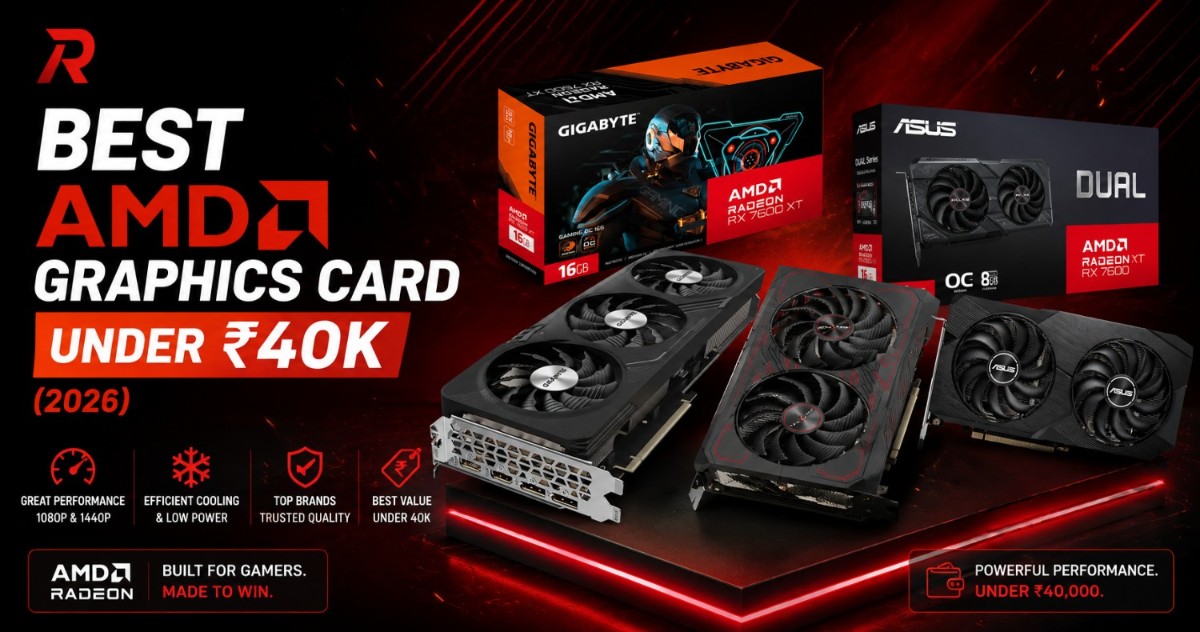
If you're shopping for the best AMD graphics card under 40k in India, the AMD RX 7600 and its 16GB XT sibling are the two cards that make the most sense at this budget right now. AMD launched the RX 7600 in May 2023, then followed it up with the RX 7600 XT in January 2024, doubling the VRAM to 16GB for buyers who wanted more headroom. Every card in this list of the best AMD graphics card under 40k picks is a variant of these two chips, just wearing a different brand's cooler and BIOS tuning. If you already know you want an amd rx 7600 and just need current India pricing across brands, skip ahead to the picks below.
This guide compares the RX 7600 and RX 7600 XT specs, pulls real prices for four cards currently listed at Avika Retails, and picks the best AMD graphics card under 40k for a few different priorities: quietest cooler, most VRAM, and lowest price. Both chips use the same 2,048 stream processor RDNA 3 core, so the real decision when you're comparing an amd rx 7600 8GB card against the 16GB XT version comes down to how much VRAM your games and workloads need.
RX 7600 vs RX 7600 XT: what changes
Both cards share the same Navi 33 GPU, the same 2,048 stream processors, and the same 128-bit memory bus running at 18 Gbps. The XT model doubles the VRAM from 8GB to 16GB using a clamshell memory design, and ships with slightly higher factory clocks. Neither card changes compute performance in any meaningful way; the XT's advantage shows up specifically in games and creative workloads that run out of video memory on the 8GB card.
| Spec | RX 7600 | RX 7600 XT |
|---|---|---|
| GPU | Navi 33, RDNA 3 | Navi 33, RDNA 3 |
| Stream processors | 2,048 | 2,048 |
| VRAM | 8GB GDDR6 | 16GB GDDR6 |
| Memory bus | 128-bit | 128-bit |
| Memory speed | 18 Gbps | 18 Gbps |
| Reference boost clock | ~2,655 MHz | ~2,755 MHz |
| Recommended PSU | 550W | 600-650W |
| Launch date | May 25, 2023 | January 24, 2024 |
| US launch MSRP | $269 | $329 |
Best picks from our current lineup
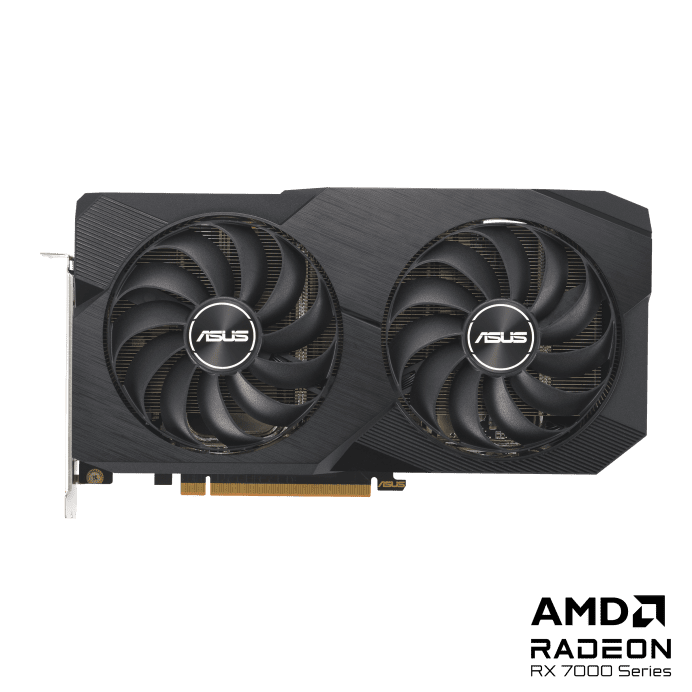
Budget pickASUS Dual Radeon RX 7600 OC Edition 8GB
Priced at ₹31,999, this ASUS card strips away RGB lighting entirely and focuses on cooling and durability instead. It's factory overclocked to a 2,715 MHz boost clock, uses a reinforced aluminum backplate, and runs on a single 8-pin power connector with a 550W recommended PSU. At 245mm long, it fits into most Micro-ATX and mid-tower cases without clearance issues.
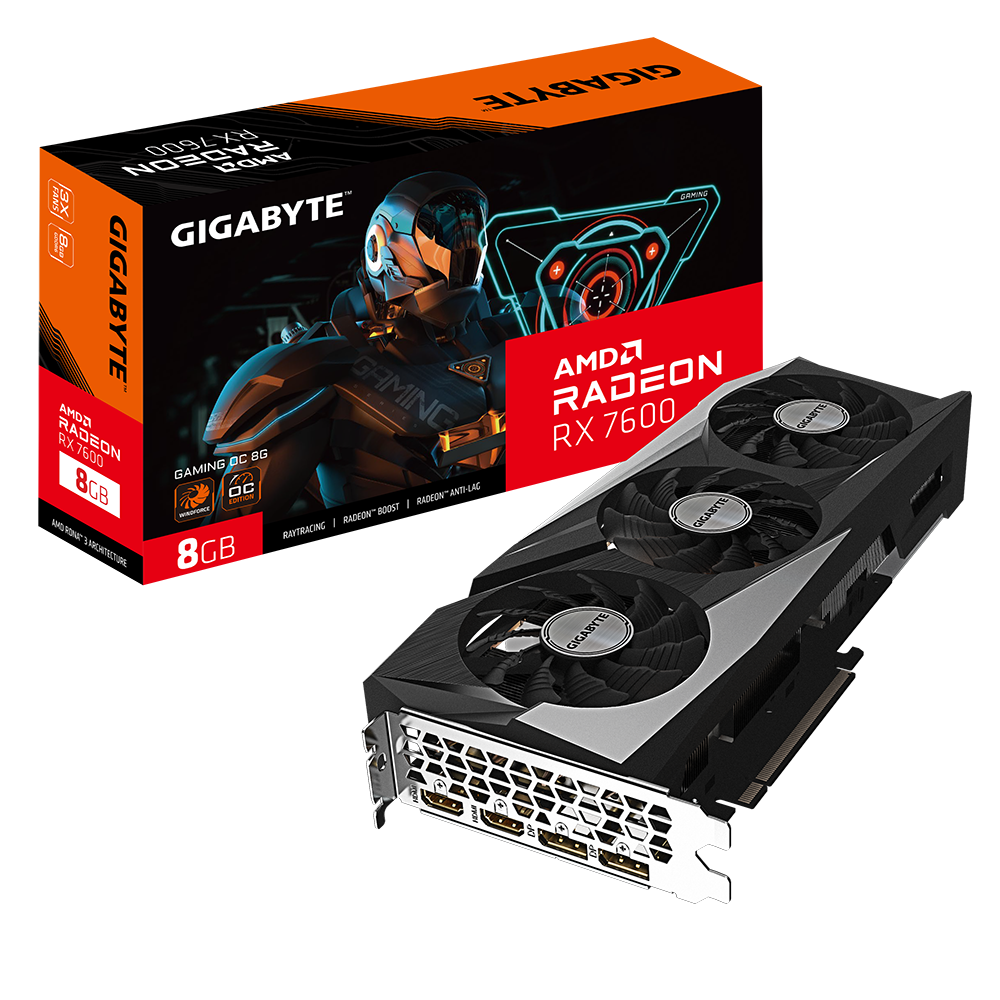
Gigabyte Radeon RX 7600 Gaming OC 8GB
Also priced at ₹31,999, this Gigabyte card matches the ASUS on price but takes a different approach: a WINDFORCE triple-fan cooler with alternate-spinning fans and a customizable RGB logo. It boosts slightly higher, up to 2,755 MHz, and uses the same 550W PSU recommendation and single 8-pin connector. The tradeoff is length, at 282mm, so measure your case before buying.
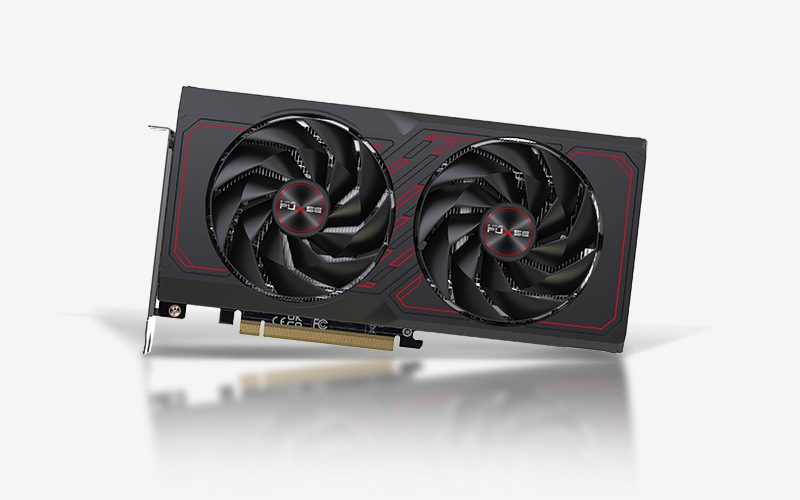
Sapphire Pulse Radeon RX 7600 XT 16GB
At ₹34,542, this is the cheaper of the two RX 7600 XT cards in our catalog. Sapphire's Dual-X cooling uses ball-bearing fans, and the card includes AV1 hardware encoding, useful if you plan to stream or edit video. It needs two 8-pin power connectors and a 600-650W power supply, a step up from the 8GB cards above.
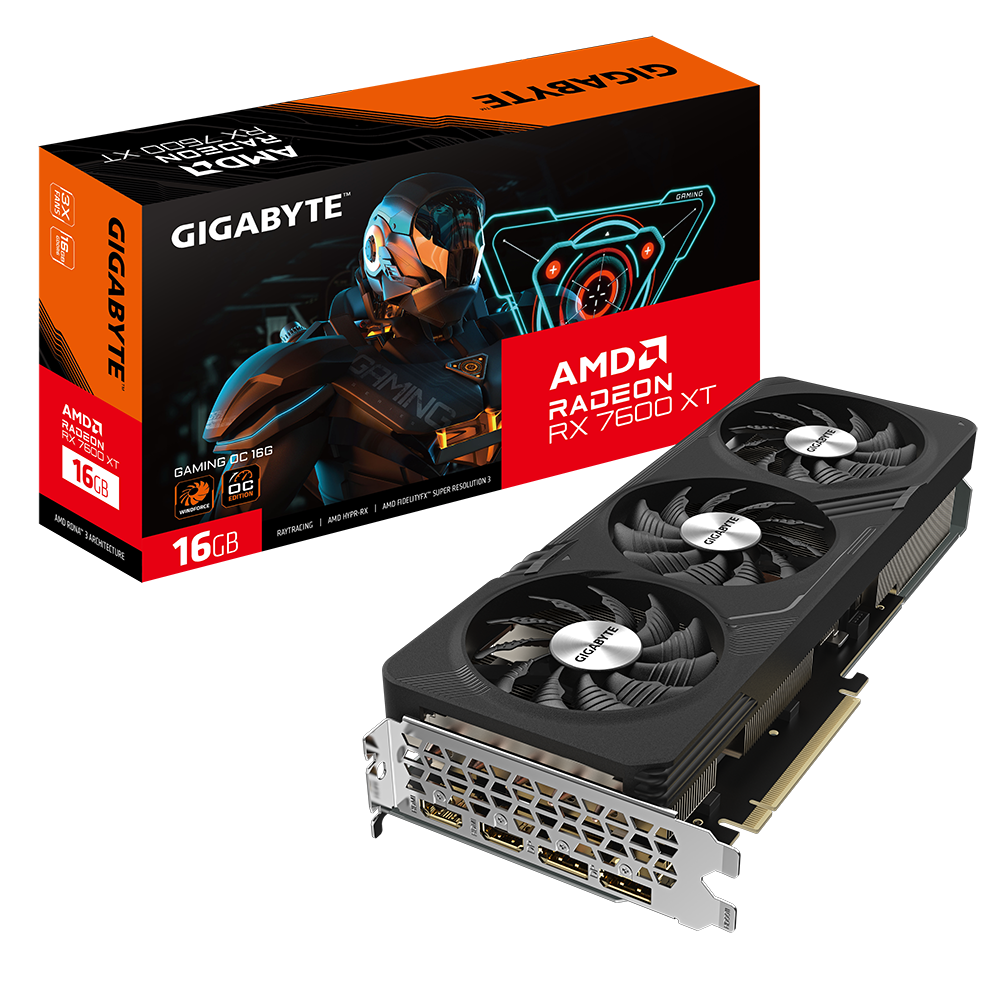
Gigabyte Radeon RX 7600 XT Gaming OC 16GB
Priced at ₹35,589, this is Gigabyte's 16GB option, built on the same WINDFORCE triple-fan cooler as their 8GB card above, with a dual BIOS switch to choose between OC and Silent modes. It costs roughly ₹1,000 more than the Sapphire Pulse XT, so unless you specifically prefer Gigabyte's cooler design or dual BIOS switch, the Sapphire is the better value at this VRAM tier.
Browse the full AMD graphics card range
Stock and pricing shift often, so check today's listing across all our AMD Radeon cards before you decide.
Full pricing comparison
| Card | VRAM | Price in India | Recommended PSU |
|---|---|---|---|
| ASUS Dual RX 7600 OC Edition | 8GB | ₹31,999 | 550W |
| Gigabyte RX 7600 Gaming OC | 8GB | ₹31,999 | 550W |
| Sapphire Pulse RX 7600 XT | 16GB | ₹34,542 | 600-650W |
| Gigabyte RX 7600 XT Gaming OC | 16GB | ₹35,589 | 600W+ |
Worth noting: all four cards land comfortably under the ₹40,000 mark, and the jump from an 8GB card to a 16GB XT card costs as little as ₹2,543 at current prices. That's a small premium for double the video memory, which is why the XT models are worth serious consideration even on a tight budget.
Is the extra VRAM on the RX 7600 XT worth it
For 1080p gaming at high settings, 8GB is still enough for the overwhelming majority of current titles, and the standard RX 7600 handles that resolution comfortably. Where 16GB earns its price is 1440p gaming with texture settings maxed out, video editing in 4K timelines, and any local AI or 3D rendering work where video memory capacity matters as much as raw compute. If your PC is purely for 1080p gaming and nothing else, the 8GB RX 7600 is not a compromise, and the ₹31,999 price makes it the easier recommendation. If you edit video, want more headroom for future games, or occasionally run creative software that leans on VRAM, the RX 7600 XT's 16GB is worth the small price difference shown in the table above.
What resolution and games can you run on an RX 7600
Both cards are built for 1080p gaming, with AMD FSR upscaling available to push frame rates higher in supported titles. The RX 7600 XT extends more comfortably into 1440p thanks to its extra VRAM headroom, though neither card is intended as a native 4K gaming solution. Ray tracing works on both cards through RDNA 3's hardware accelerators, but turning it on will meaningfully reduce frame rates on a card at this tier, so most buyers will want to lean on FSR alongside ray tracing rather than running it at native resolution.
Pairing either card with the right CPU matters too, since a weak processor can hold back even a budget-tier GPU like these. Our Ryzen 5 vs Intel Core i5 comparison and best GPU-CPU combos for every budget guides are worth reading if you haven't settled on a processor yet, and our best CPU pairings for the RTX 5060 without bottlenecking guide covers similar bottleneck logic that applies here too. If you're still deciding between AMD and Intel for the whole build, our Intel vs AMD breakdown covers the platform-level tradeoffs.
Buying tips before you check out
A few things worth confirming before you order any of these cards:
- Check your power connector count. The 16GB XT cards in this lineup need two 8-pin connectors and a 600W+ supply, while the 8GB cards need only one 8-pin connector on a 550W supply. Our guide to choosing the right power supply covers what else to check before buying a PSU.
- Measure your case if length matters. The triple-fan Gigabyte cards run close to 282mm, noticeably longer than the 245mm ASUS card, which matters in compact cases.
- Compare identical specs across brands before assuming price reflects performance. As the pricing table shows, the two 8GB cards here are priced identically despite different cooler designs, and the two 16GB cards differ by roughly ₹1,000.
Slightly above your budget?
Spread the cost with Bajaj EMI instead of forcing a downgrade to a lower tier.
Frequently asked questions
What is the best AMD graphics card under 40k?
At current India pricing, the ASUS Dual RX 7600 OC Edition and Gigabyte RX 7600 Gaming OC are both priced at ₹31,999 for 8GB cards, while the Sapphire Pulse RX 7600 XT at ₹34,542 offers 16GB of VRAM for only about ₹2,500 more. For most 1080p gamers on a budget, the 8GB cards are the simpler choice; for anyone who edits video or wants more future headroom, the Sapphire XT is the better value.
Is the RX 7600 or RX 7600 XT better?
Both use the identical 2,048 stream processor GPU, so raw gaming performance at 1080p is nearly the same. The RX 7600 XT's advantage is its 16GB of VRAM against the standard card's 8GB, which matters for 1440p gaming, video editing, and any workload that runs out of memory on the smaller buffer.
How much VRAM do you need for an AMD graphics card in 2026?
8GB remains sufficient for most games at 1080p. 16GB is worth paying for if you game at 1440p with high texture settings, edit video, or want the card to stay relevant for longer as game VRAM requirements continue to grow.
Can the RX 7600 or RX 7600 XT handle 1440p gaming?
The standard RX 7600 is best kept at 1080p for consistently smooth frame rates. The RX 7600 XT's extra VRAM makes 1440p a realistic option, especially with FSR upscaling enabled, though neither card is built for native 4K gaming.
When did the AMD RX 7600 and RX 7600 XT launch?
AMD launched the RX 7600 on May 25, 2023, followed by the RX 7600 XT on January 24, 2024, at $329, adding 16GB of VRAM over the original 8GB while keeping the same core GPU.