


RTX 5060 vs RTX 4060: Which GPU Should You Buy in India 2026?

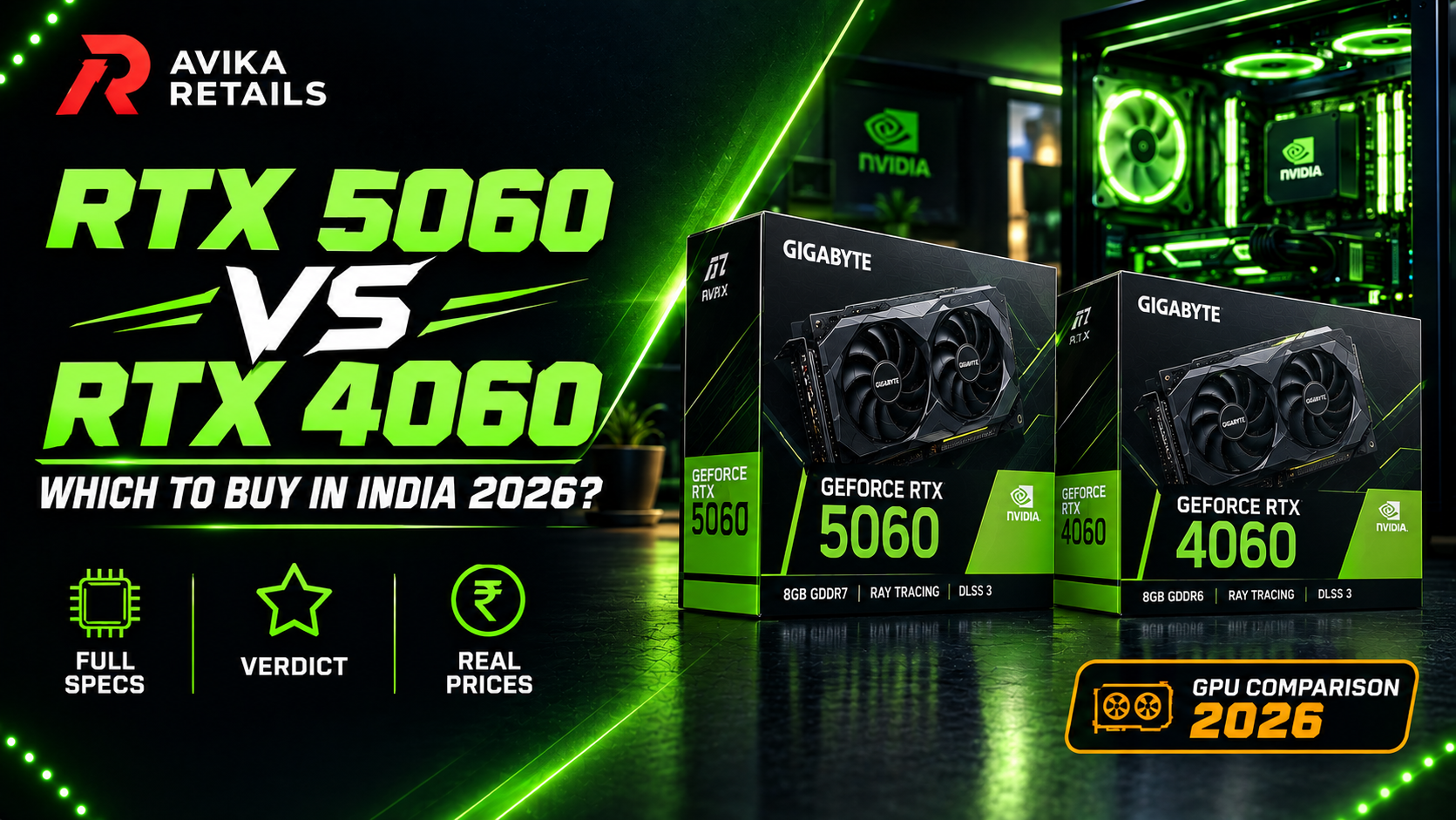
RTX 5060 vs RTX 4060 is the comparison most Indian gamers end up making when they have a 1080p monitor and a mid-range budget. Both are 8GB, 128-bit Nvidia cards aimed at the same buyer, and the RTX 5060 vs RTX 4060 question really comes down to generation: the RTX 5060 runs on Blackwell with faster GDDR7 memory and DLSS 4 Multi Frame Generation, while the RTX 4060 is the Ada Lovelace card that has been the default budget pick since 2023. On paper the RTX 5060 vs RTX 4060 gap looks obvious, but the right buy depends on what you can actually get at a sensible price in India today.
This guide puts the RTX 5060 vs RTX 4060 specs side by side using Nvidia's published numbers, explains what each difference means in a real build, and gives a straight verdict. We are a hardware store in Nehru Place, so we will be upfront: neither card is in our standalone graphics card catalog right now. After the RTX 5060 vs RTX 4060 verdict, we point you to the cards we do stock in the same bracket, with real prices, so you can decide on something you can actually buy this week.
RTX 5060 vs RTX 4060: which is better?
The RTX 5060 is the better card. It has 25% more CUDA cores (3,840 vs 3,072), GDDR7 memory with about 65% more bandwidth (448 GB/s vs 272 GB/s), a PCIe 5.0 interface, and DLSS 4 Multi Frame Generation, which the RTX 4060 cannot run. The RTX 4060 still makes sense only if you find it clearly cheaper, since both cards share the same 8GB VRAM limit.
RTX 5060 vs RTX 4060: specs side by side
These are Nvidia's reference specifications. Factory-overclocked partner cards can run slightly higher clocks, but the core configuration is the same across brands.
| Spec | GeForce RTX 5060 | GeForce RTX 4060 |
|---|---|---|
| Architecture | Blackwell (2025) | Ada Lovelace (2023) |
| CUDA cores | 3,840 | 3,072 |
| Boost clock (reference) | 2.50 GHz | 2.46 GHz |
| Memory | 8GB GDDR7 | 8GB GDDR6 |
| Memory bus | 128-bit | 128-bit |
| Memory bandwidth | 448 GB/s | 272 GB/s |
| PCIe interface | PCIe 5.0 x8 | PCIe 4.0 x8 |
| Total graphics power | 145W | 115W |
| Tensor / RT cores | 5th gen / 4th gen | 4th gen / 3rd gen |
| Frame generation | DLSS 4 Multi Frame Gen (up to 4x) | DLSS 3 Frame Gen (2x) |
What the differences mean for your build
More cores and much faster memory
The RTX 5060 has 768 more CUDA cores and a newer architecture, so expect it to be faster in native rendering in most games. The bigger change is memory: on the same 128-bit bus, GDDR7 at 28 Gbps gives it 448 GB/s against 272 GB/s on the RTX 4060's GDDR6, which helps most at higher settings.
DLSS 4 Multi Frame Generation vs DLSS 3
On the RTX 5060, DLSS 4 can generate up to three extra frames for every rendered frame in supported games. The RTX 4060 is limited to DLSS 3 Frame Generation, one generated frame per rendered frame. Two honest caveats: generated frames look smoother but do not make the game respond faster to your mouse, and frame generation works best when the base frame rate is already reasonable. The newer DLSS 4 upscaling model also runs on RTX 40 cards; only Multi Frame Generation is RTX 50 only.
8GB VRAM on both
Neither card fixes the biggest weakness of this class: 8GB of video memory. At 1080p with sensible textures it is workable; at 1440p or with ultra textures in newer AAA titles it can run out on either card. For 1440p, a 16GB card is the safer bet, which is why the picks below lean that way.
Power and PCIe lanes
Neither card needs a big power supply (see the FAQ below). Both use only eight PCIe lanes, so on an older PCIe 3.0 board such as A520 or B450 they get half the link bandwidth they were designed around, which hurts most when VRAM fills up. A PCIe 4.0 board like B550 avoids most of that; our best B550 motherboards guide covers good options.
What is the RTX 4060 price in India right now?
The RTX 4060 and RTX 4060 Ti are not in Avika Retails' current graphics card catalog, and the standalone RTX 5060 is not listed either, so we are not quoting a price we cannot sell at. Message us on WhatsApp for a current price check. If you want a card you can buy today in the same bracket, the RTX 5060 Ti 16GB, RX 9060 XT and RTX 3060 12GB below are in stock.
The verdict: RTX 5060 or RTX 4060?
If both cards are available at roughly the same price, buy the RTX 5060: more cores, far more bandwidth, PCIe 5.0 and Multi Frame Generation. The RTX 4060 is only worth it if you find it at a clear discount and you play mostly at 1080p, where it remains a capable, efficient card. And if you are stretching for 1440p, skip both 8GB cards and look at a 16GB card instead.
What to buy at Avika instead (in stock now)
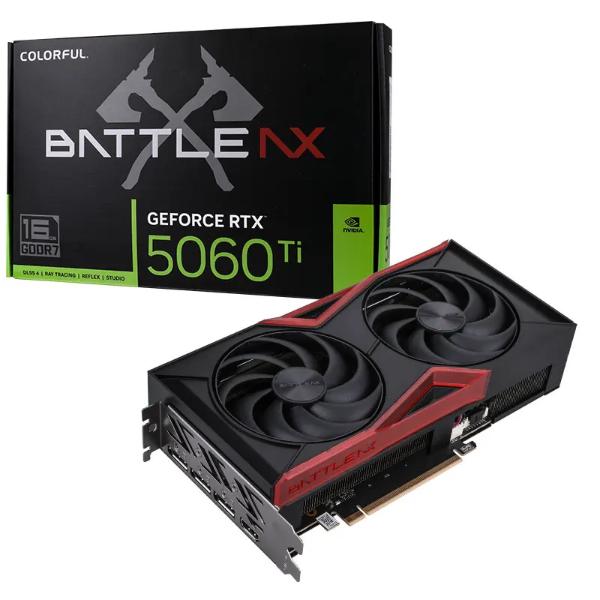
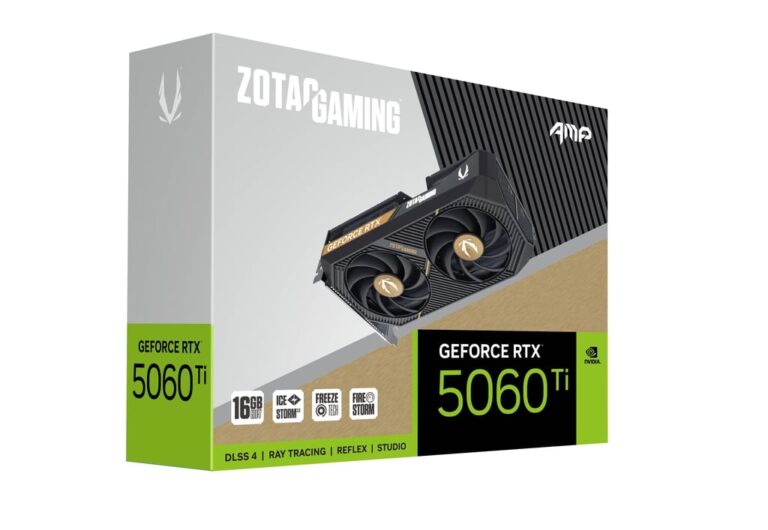
Best step upNvidia GeForce RTX 5060 Ti 16GB
The RTX 5060 Ti is the same Blackwell generation with 4,608 CUDA cores, GDDR7 and DLSS 4 Multi Frame Generation, and the 16GB version doubles the VRAM, removing the main worry with both cards above. It is the card we would choose for 1440p or for anyone keeping a GPU for four or five years. We stock two versions at the same price.
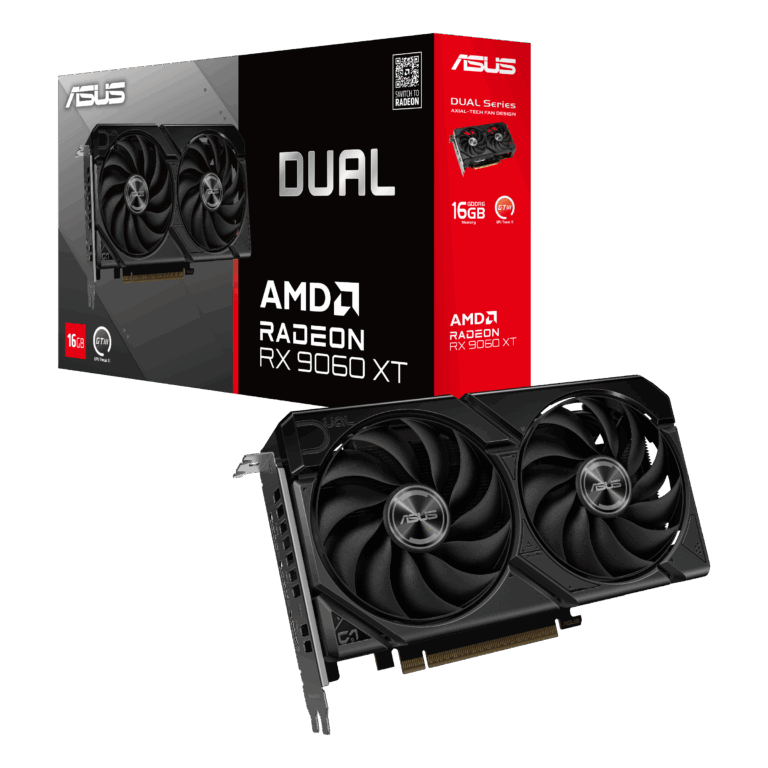
AMD Radeon RX 9060 XT 16GB
If you are not tied to Nvidia features like DLSS, the RX 9060 XT is, in our view, the best value in this bracket that we have in stock. It is AMD's current RDNA 4 card with 16GB of VRAM and a PCIe 5.0 interface, at well under the RTX 5060 Ti's price.
Nvidia GeForce RTX 3060 12GB
The RTX 3060 is an older Ampere card without DLSS frame generation, but it has 12GB of VRAM on a 192-bit bus, which is more memory than either the RTX 5060 or RTX 4060. At current prices, compare it closely with the RX 9060 XT 16GB above before you decide. Our RTX 3060 price guide goes deeper.
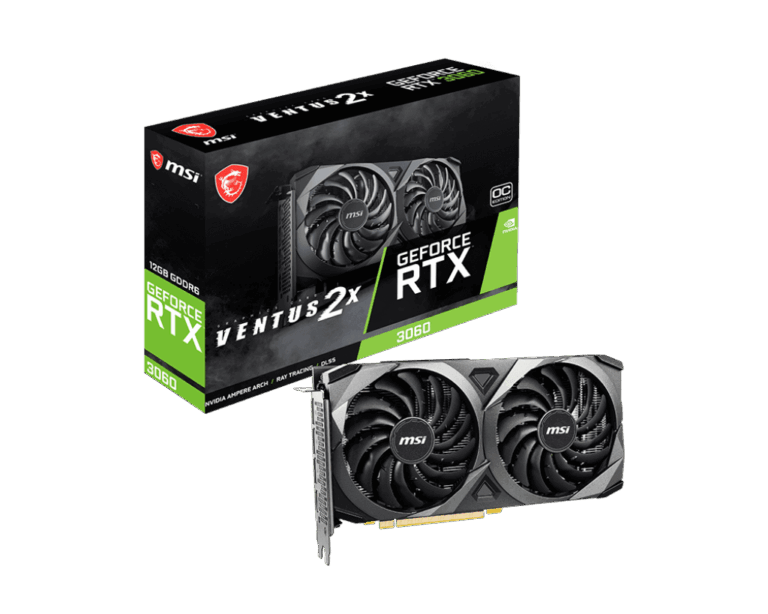
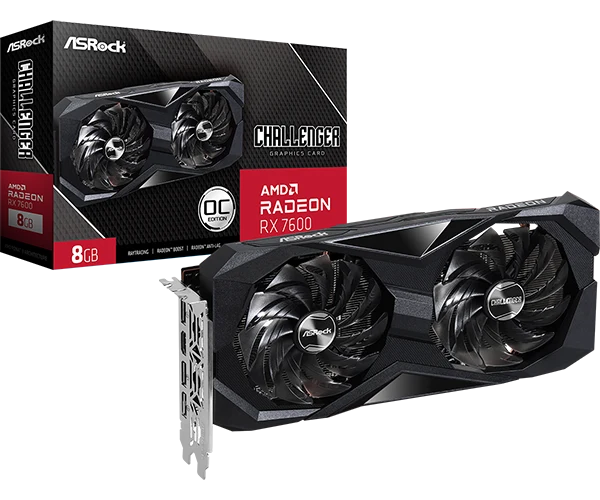
AMD Radeon RX 7600 and Nvidia RTX 3050
If this budget is more than you want to spend, the RX 7600 8GB is a solid 1080p card, and the RTX 3050 is our cheapest Nvidia gaming card, best for esports titles.
Browse every graphics card in stock
GPU stock moves quickly, so check today's listing before you decide.
In-stock alternatives compared
| Graphics card | VRAM | Architecture | Frame generation | Price |
|---|---|---|---|---|
| RTX 5060 Ti 16GB (Colorful) | 16GB GDDR7 | Blackwell | DLSS 4 Multi Frame Gen | ₹99,999 |
| RTX 5060 Ti 16GB (ZOTAC AMP) | 16GB GDDR7 | Blackwell | DLSS 4 Multi Frame Gen | ₹99,999 |
| RX 9060 XT 16GB (ASRock) | 16GB GDDR6 | RDNA 4 | AMD FSR frame gen | ₹62,999 |
| RX 9060 XT 16GB (ASUS Dual) | 16GB GDDR6 | RDNA 4 | AMD FSR frame gen | ₹59,999 |
| RTX 3060 12GB (MSI Ventus 2X) | 12GB GDDR6 | Ampere | No DLSS frame gen | ₹55,999 |
| RX 9060 XT 8GB (ASRock Steel Legend) | 8GB GDDR6 | RDNA 4 | AMD FSR frame gen | ₹49,999 |
| RX 7600 8GB (ASUS Dual OC) | 8GB GDDR6 | RDNA 3 | AMD FSR frame gen | ₹37,999 |
| RTX 3050 6GB (MSI Ventus 2X) | 6GB GDDR6 | Ampere | No DLSS frame gen | ₹26,999 |
Want an RTX 5060 anyway? Get it in a complete PC
The standalone RTX 5060 is not in our card catalog, but it powers two of our ready-to-run gaming PCs, both with an Intel Core i7-12700F, 16GB RAM and a 1TB Gen 4 SSD:
- AR AviVolt pre-built gaming PC with RTX 5060 8GB, B760M DDR5 WiFi board and 16GB DDR5 at ₹1,44,999.
- AR AviForge pre-built gaming PC with RTX 5060 8GB, B760M DDR4 board and 16GB DDR4 at ₹1,54,999.
- Prefer to pick every part yourself? Use our custom PC build service or browse all pre-built PCs.
More entry-level options
- Gigabyte RTX 3050 WindForce OC 6GB at ₹26,999 and ZOTAC RTX 3050 Eco 8GB at ₹37,999 for budget Nvidia builds.
- ASRock RX 9060 XT Steel Legend OC 8GB (white) at ₹49,999 for 1080p builds with a white theme.
RTX 5060 vs RTX 4060 Ti: which should you pick?
The RTX 4060 Ti has more CUDA cores than the RTX 5060 (4,352 vs 3,840) but uses older GDDR6 memory and is limited to DLSS 3 Frame Generation. The RTX 5060 has faster GDDR7 and Multi Frame Generation. With the same 8GB ceiling on both, price decides; at RTX 4060 Ti money, the RTX 5060 Ti 16GB is the better long-term buy.
Pairing the GPU with the right CPU and platform
A good GPU still needs a CPU that can keep up. Our best CPU pairings for the RTX 5060 without bottlenecking applies to every card in this class, and the best GPU-CPU combos for every budget lays out full builds by price. To see where these cards sit in Nvidia's whole range, read our Nvidia RTX 50 and 40 series price guide, and for the very top end, our RTX 4090 in India guide explains who actually needs that tier. Upgrading from a GTX card? See our GTX 1650 vs GTX 1660 Super comparison.
Want a live price on an RTX 5060 or RTX 4060, or advice on what fits your cabinet? Message us on WhatsApp or visit our Nehru Place store and see the cards in person.
Want the 16GB card but not the full upfront cost?
Spread the price of an RTX 5060 Ti or RX 9060 XT over monthly instalments with Bajaj EMI instead of settling for an 8GB card.
Frequently asked questions
Is the RTX 5060 better than the RTX 4060?
Yes. The RTX 5060 has 3,840 CUDA cores against 3,072, GDDR7 memory with 448 GB/s of bandwidth against 272 GB/s, a PCIe 5.0 interface, and support for DLSS 4 Multi Frame Generation. Both cards have 8GB of VRAM, so neither is ideal for heavy 1440p gaming.
What is the RTX 4060 price in India in 2026?
Avika Retails does not currently list the RTX 4060 or RTX 4060 Ti, so we do not quote a price for them. Message us on WhatsApp for a current price check, or look at in-stock alternatives such as the RX 9060 XT 16GB at ₹59,999 or the RTX 3060 12GB at ₹55,999.
Can the RTX 4060 use DLSS 4?
Partly. RTX 40 series cards support the newer DLSS 4 upscaling model and DLSS 3 Frame Generation, which adds one generated frame per rendered frame. DLSS 4 Multi Frame Generation, which generates up to three extra frames, is exclusive to RTX 50 series cards like the RTX 5060.
Is 8GB of VRAM enough in 2026?
For 1080p gaming with sensible texture settings, 8GB is still workable. For 1440p or ultra textures in newer AAA games, 8GB can run out, which affects the RTX 5060 and RTX 4060 equally. A 16GB card gives more headroom.
Which power supply do I need for an RTX 5060 or RTX 4060?
The RTX 5060 is rated at 145W total graphics power and the RTX 4060 at 115W, so a good quality 550W to 650W power supply from a known brand is enough for a typical gaming build with either card.